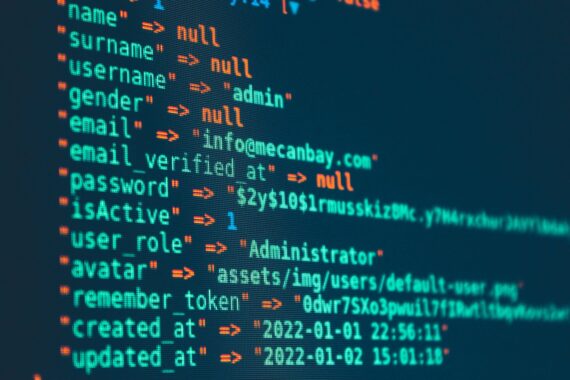
A critical vulnerability that does not require login credentials was found in Drupal core. The flaw involves install.php, the site’s installation file. Under certain conditions, an attacker can use it to try to reinstall Drupal. This could result in a complete site takeover or arbitrary code execution on the server.
The vulnerability was assigned CVE-2026-132165. The Drupal security team initially rated it 18/25, then raised the score to 20/25—the highest severity band—after reports of exploitation on live sites. Its CVSS 3.1 score is 9.8. The flaw was discovered using Anthropic’s OSS Scanner.
Which versions are affected
All versions before Drupal 10.6.22, versions 11.0.0 through 11.3.22, and versions 11.4.0 through 11.4.13 are affected. Fixed versions were released on November 18, 2026: 10.6.22, 11.3.22, and 11.4.13. Drupal 11.2.x and earlier, Drupal 10.5.x and earlier, and Drupal 8 and 9 are no longer supported and will not receive patches.
The Drupal security team said it received reports that the vulnerability was being exploited on live sites as of November 19, 2026, at 19:00 UTC. CISA also added it to its Known Exploited Vulnerabilities catalog on November 24, 2026. The remediation deadline is November 27, 2026.
Why is it so dangerous
The install.php file is normally used for the initial Drupal installation. If it remains accessible after the site is set up, an attacker can try to restart the installation process. Some attack paths are blocked if the web server cannot write to settings.php or change its permissions. But that isn’t true in every case.
The same updates also include a patch for CVE-2026-132166. This second vulnerability can only be used if the site has a separate insecure data deserialization flaw, and it cannot be exploited directly on its own.
What should site owners do
The first step is to update core with Composer, then run the database updates and clear the cache. If you can’t update right away, Drupal recommends disabling the installation file as a temporary workaround. You can block access to this path with the “Require all denied” rule in Apache or the “location = /core/install.php” rule in nginx. Because this rule is set at the server level, it remains in effect after core updates. Making settings.php read-only can also block some attack paths.
After a site goes live, administrators should check server logs for requests to install.php. They should also check whether settings.php has changed, look for new administrator accounts, and check for unexpected PHP files under sites/default/files. Sites running unsupported versions won’t receive a patch, so the installation file should be disabled and the site upgraded as soon as possible.
Source: Drupal.org · CISA KEV
Share your experience
Bir sorunun, farklı bir çözümün veya eklemek istediğin bir notun var mı? Giriş yapmadan da yazabilirsin.