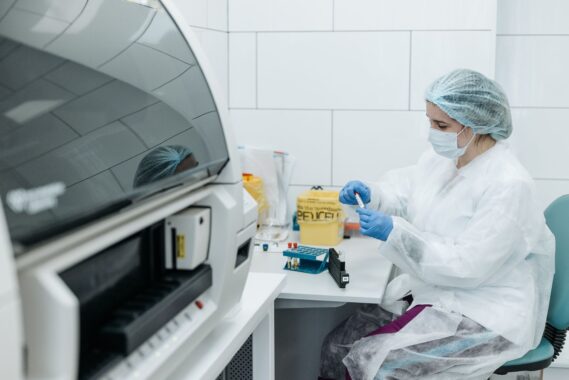
Approximately 950 Claude AI agents assigned within Anthropic discovered a new enzymatic gene-editing architecture in bacteriophage genomes that had been overlooked until now. The system, called ‘Array-associated reverse transcriptases,’ or ARTs, points to a different defense mechanism that is structurally similar to CRISPR but has remained hidden in viruses.
In the familiar story, CRISPR, as an immune shield that bacteria developed against viruses, became a molecular scissors through the work of Jennifer Doudna and Emmanuelle Charpentier in 2012 and won the Nobel Prize. This time, Anthropic researchers looked from the opposite direction: Which countermechanism were viruses infecting bacteria using to overcome the bacterium’s genetic defense?
950 agents scanned 1.9 billion protein clusters in 21 hours
The Anthropic science team solved a genomic analysis that would take human researchers decades with an autonomous multi-agent architecture. Approximately 950 independent Claude inference agents shared tasks under a common coordination protocol:
- The agents scanned microbial and viral DNA sequences in open-source databases in parallel, filtering 1.9 billion protein clusters and unusual reverse transcriptase variations.
- The screening process that human bioinformatics teams spread over years was reduced to a few candidates within 21 hours by the agents’ autonomous cross-comparisons.
- A specialist agent in the swarm caught a genetic pattern right next to the reverse transcriptase enzyme that resembled the regularly interspaced palindromic repeat sequences that are CRISPR’s hallmark.
How the ARTs system differs from CRISPR
The system that Anthropic researchers call ARTs consists of three components: a specialized reverse transcriptase enzyme that can convert RNA sequences into double-stranded DNA, an accessory protein whose function is not yet known, and repeat sequences that carry genetic memory blocks copied from previous infections, as in CRISPR.
This architecture differs from CRISPR’s ‘cut and destroy the target’ logic. The findings indicate that viruses can write new genetic information into a target DNA region under RNA guidance. Researchers assess that viruses use this system to disrupt the bacterium’s immune mechanism or to hide their own genetic material in the bacterium’s chromosome.
Still at the laboratory validation stage
Anthropic and independent genetics institutes emphasize that the discovery is still at a theoretical and bioinformatics stage. Whether the system can turn into a genetic therapy tool will become clear as a result of ongoing wet-lab experiments.
If ARTs show programmable precision, it could be effective in two areas. In the treatment of hereditary diseases, it could reduce the risk of unwanted mutations caused by CRISPR-Cas9’s double-strand breaks, because reverse transcriptase-based systems have the potential to write the correct sequence without cutting DNA. In synthetic biology, it could offer a more flexible toolkit for climate-resilient plant genomes and microorganisms that produce industrial enzymes.
The discovery also brought a biosecurity debate with it. The ability of an AI swarm to find a new viral enzyme system in 21 hours raises the risks of pathogen or toxin modification. Anthropic stated that the model operates under strict safety filters that block attempts to synthesize dangerous virus sequences.
Source: WebTuring


Share your experience
Bir sorunun, farklı bir çözümün veya eklemek istediğin bir notun var mı? Giriş yapmadan da yazabilirsin.