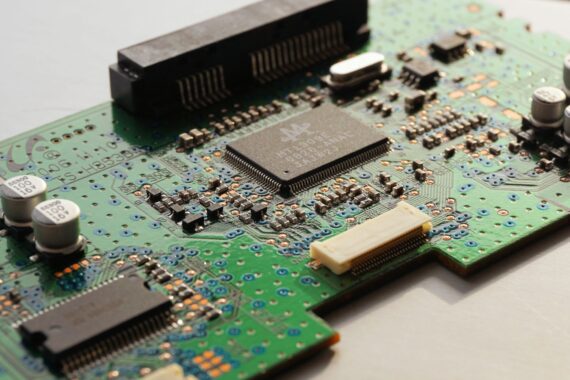
For decades, a boundary in the semiconductor industry had remained the exclusive domain of human architects. Now, Palo Alto-based startup Architect Labs has crossed it for the first time with autonomous software agents. The company unveiled Frostbite, a general-purpose processor architecture designed and validated from end to end by a swarm of AI agents.
Until now, AI has been used in chip engineering only as an assistive tool for narrow tasks such as transistor placement or wiring optimization. In the Frostbite project, however, the agents built the entire hardware-software stack from scratch, without human intervention—from the compiler and instruction set architecture (ISA) to the microarchitecture, RTL code, and a production-ready 7nm physical GDS layout.
Instead of Von Neumann: a lost model from the 1990s
When designing a new processor, human engineers naturally follow sequential (Von Neumann) patterns built on decades of accumulated work, such as x86, ARM, or RISC-V. Architect Labs’ agent swarm, however, surveyed the computer science literature and tested hundreds of variations using Python models before choosing Interaction Nets, a computational model developed in 1990.
In this graph-based paradigm, programs run as interconnected graphs of nodes, and each piece of data has only one owner. Because data dependencies are explicit in the graph, the processor doesn’t need complex out-of-order circuitry to hunt for dependencies at runtime; pairs of non-conflicting nodes can be processed simultaneously, without any locking mechanism. This also eliminates the need for massive L2/L3 caches and power-hungry cache-coherence networks. In the decentralized tiled architecture the agents discovered through iteration, units that finish their work can dynamically pull tasks from busy neighbors or shut themselves down to save energy.
A claimed 4.59x efficiency gain—and engineers’ caveats
According to Architect Labs’ 7nm pre-silicon simulations, a four-core Frostbite cluster delivers 4.59 times the performance per watt and 8.77 times the performance per unit of silicon area, compared with a modern, silicon-proven reference core across 25 different workloads.
However, experienced hardware engineers have some important caveats about these impressive figures. There is no actual silicon yet: all the metrics come from simulation and the GDS layout stage, and the first physical production samples (tape-outs) are expected in mid-2027. The architecture may also excel at symbolic reasoning, functional programming, and edge inference tasks, but its performance with conventional legacy software has yet to be tested. For legal reasons, the identity of the core used for comparison and Frostbite’s RTL/ISA code have not been made public either.
A turning point in hardware design?
If Frostbite manages to validate even half of these simulation claims in physical silicon next year, it could mark a major paradigm shift in the history of semiconductor engineering. AI agents are now reimagining not only the software that runs them, but also the logical rules of the silicon they run on—free from human bias.
Source: WebTuring


Share your experience
Bir sorunun, farklı bir çözümün veya eklemek istediğin bir notun var mı? Giriş yapmadan da yazabilirsin.