A few lines you type into an AI model from your phone cause a few sips of clean water to evaporate from a cooling tower on the other side of the world and mix into the atmosphere. AI’s electricity consumption and carbon footprint are often discussed; its pressure on fresh water, however, remained off the agenda for a long time. So how does a digital piece of software physically consume water?
Direct consumption: evaporating water towers
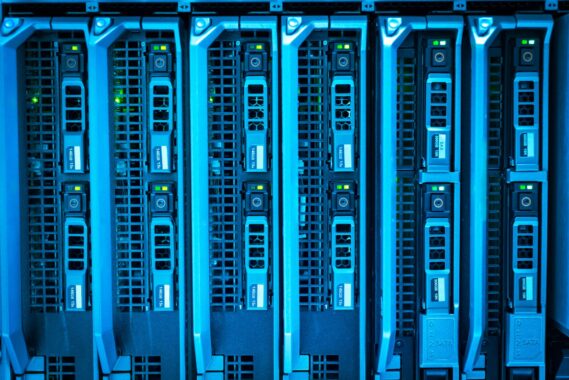
When hundreds of thousands of high-performance GPUs run at full capacity, they give off heat of thousands of degrees. If this heat is not removed, servers go down within seconds. Because air cooling consumes too much electricity at this density, facility engineers turn to evaporative cooling towers: hot water coming from the servers drips down through the towers’ grilles and meets air blown by powerful fans, and the evaporating water takes the ambient heat and carries it into the sky.
The critical part of this method is that about 70 to 85 percent of the water drawn is lost as steam. The water remaining at the bottom of the tower, meanwhile, is discharged into the sewer because its mineral concentration has risen; in other words, the water used is not returned to the drinking water basin.
The numbers confirm this picture, too. A medium-sized data center consumes about 300,000 gallons, or around 1.1 million liters, of water per day. At huge hyperscale campuses, this amount can rise to 1 to 5 million gallons per day. That equals the entire daily water needs of a town of 40,000 people.
The real invisible bill is at thermoelectric power plants
AI’s water footprint is not limited to the towers in the data center’s yard. Coal, natural gas, and conventional nuclear power plants draw cooling water from huge lakes and rivers to spin turbines and condense steam. According to research, for every 1 liter of water a data center evaporates on site, about 8 to 12 liters of water are indirectly consumed at the power plants generating the electricity it draws from the grid. It is calculated that the electricity-related indirect water consumption of data centers in the US alone exceeds 200 billion gallons per year.
The water cost of an AI query
According to modeling by researchers at the University of California, Riverside, a simple text query of 20-50 words causes an average of 0.05 to 0.5 milliliters, or a few drops, of direct water evaporation. A complex prompt chain that is multimodal, generates video, or requires deep reasoning, however, can go up to half a liter, or one bottle of water. Considering that millions of users make billions of queries a day, these microscopic drops turn into a huge flow.
Closed-loop and gray water solutions
In the face of growing public backlash and drought risk, technology companies are putting new cooling approaches into action. Closed-loop liquid cooling circulates coolant inside pipes without evaporating it outside, reducing fresh water loss by up to 90 percent; however, its installation cost is high. The use of treated wastewater, or gray water, directs cities’ treated sewage and industrial wastewater to cooling instead of burdening the municipal drinking water lines. In immersion cooling, servers are placed directly into tanks of non-conductive dielectric oil, and water needs can be completely eliminated.
Although AI may seem to live in the cloud, its roots are tied to the world’s rivers and underground aquifers. The transparent disclosure of water consumption by data centers and the shift of cooling technologies to closed-loop systems remain an issue that cannot be postponed if the AI revolution is to advance without consuming the planet.
Source: WebTuring



Share your experience
Bir sorunun, farklı bir çözümün veya eklemek istediğin bir notun var mı? Giriş yapmadan da yazabilirsin.