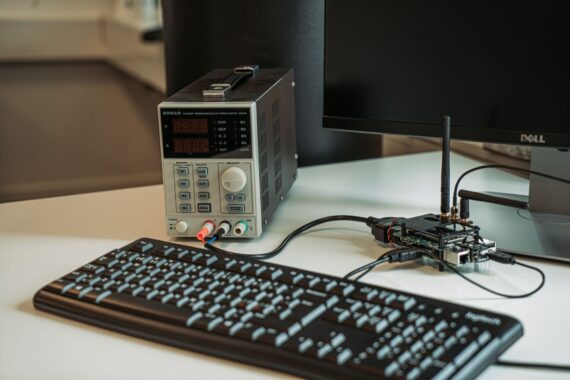
NVIDIA has added a new model with 64 GB of unified memory to its DGX Spark family of compact desktop supercomputers. Positioned below the existing 128 GB flagship, the system draws its power from the GB10 Grace Blackwell superchip and delivers 1 petaFLOP of AI compute with FP4 precision and sparsity support. NVIDIA designed this configuration for independent developers, AI researchers, and engineering offices.
The system’s goal is clear: to let teams that want to avoid cloud costs and API bills run autonomous AI agents on their own desks.
GB10 Grace Blackwell architecture brings data center power to the desktop
At the heart of the DGX Spark 64GB is the GB10 superchip, which combines a 20-core Arm Neoverse CPU with Blackwell graphics architecture on a single die. The key difference that sets the system apart from consumer graphics cards is its coherent unified memory architecture: the CPU and GPU can simultaneously access a 64 GB LPDDR5x memory pool with 273 GB/s bandwidth without hitting a PCIe bottleneck. This means the weights of a large language model and the agents’ working memory are shared in the same pool.
NVIDIA says the system can hold open-weight models in the 30–35 billion parameter class in memory with their full context window; examples given include reasoning-focused models such as Nemotron 3.5 Lightning, Qwen 3.8-27B, and Meta Muse Glimmer. For cooling, it uses vapor chamber liquid-assisted air cooling, meaning the device runs quietly enough to fit on an office desk.
Two DGX Sparks combine into a 128 GB cluster
The model comes with a built-in ConnectX-7 high-speed network controller for scalability. Developers can connect two DGX Spark 64GB units directly with a cable to set up a 128 GB unified memory cluster. This means teams starting with 64 GB can add a second unit and move up to 70B-class models when model sizes grow, without having to get rid of their hardware.
A local alternative to cloud dependency
In enterprise AI integrations, privacy and latency stand out as two main issues. Keeping data from leaving the device is decisive, especially for legal, healthcare, and engineering teams working with sensitive data. By running agents locally, the DGX Spark 64GB aims to enable production with both zero cloud latency and no API costs.
This move by NVIDIA shows that AI compute power does not belong only to giant data centers. The 1 petaFLOP of power coming down to the desktop could accelerate the spread of autonomous agents.
Source: WebTuring


Share your experience
Got a question, a different solution or a note to add?
Log in or join us to write a comment.
Log in ↗︎Sign up ↗︎