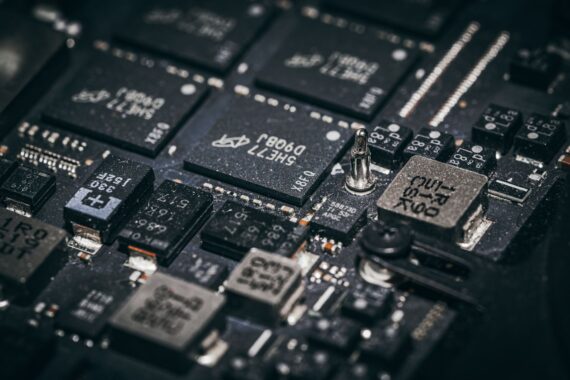
Chip designer SiMa.ai announced a $150 million Series C funding round on September 28, 2026. The round, completed under the co-leadership of Fidelity Management & Research and Amplify, raised the company’s valuation to $1.45 billion. The San Jose, California-based startup has thus raised a total of $500 million in capital.
New investors include banks and a state fund
According to the company’s announcement, Alter Venture Partners, Dell Technologies Capital, Maverick Capital, +ND Capital, Point72, and StepStone Group participated in the round. AllianceBernstein, Baron Capital, J.P. Morgan, and the State of Michigan are among those investing in SiMa.ai for the first time. The round is said to have closed oversubscribed.
Where the money is going: next-generation chips and agent software
SiMa.ai says it will use the new capital in two main areas. The first is scaling Palette Neat, which the company describes as the industry’s first “agent-based” physical AI software environment. The second is next-generation hardware targeting 1,000 dense TOPS of compute power.
The new products, planned for release in the first half of 2028, will include machine learning IP, chiplets, and SoCs. The company is targeting this hardware at mid- and high-end drones, humanoid robots, automotive advanced driver assistance systems (ADAS), and AI-powered cockpits. It says existing customers will be able to migrate their applications to the new architecture.
The platform and customer network sold today
SiMa.ai’s Modalix MLSoC, which it already ships, delivers 50 TOPS of multimodal AI compute at under 10 watts of power consumption. The chip supports BF16, INT8, and INT16 precisions as well as MIPI, USB, PCIe Gen5, and SPI interfaces; it can run CNN, ViT, LLM, and LMM workloads. According to the company’s documentation, Modalix is pin-compatible with NVIDIA Jetson Orin NX and Nano modules, meaning existing boards can be upgraded directly. The $1,499 Modalix DevKit ships with the Palette software preinstalled.
The customer and partner list includes names such as Bosch, Micron, Synopsys, Emerson, TRUMPF SE, Kontron, ARK Electronics, AVerMedia, Intrinsic, L&T Technology Services, STIGA, and Virya Autonomous Technologies. The company says it quadrupled its revenue year over year between 2024 and 2025, and that the upward momentum continued in 2026.
The claim of an alternative to NVIDIA GPU dependence
SiMa.ai argues that physical AI has so far remained tied to expensive, complex, and power-hungry NVIDIA GPUs. According to the company, its full-stack platform combines silicon built for physical AI with software to cut deployment time from months to days, or even hours. Founder and CEO Krishna Rangasayee describes physical AI in humanoid robots, automotive, and drones as “the door to a $50 trillion market that modern innovation has largely left untouched.”
The announcement also cites Counterpoint Research’s forecast that physical AI device shipments, covering robotics, automotive, and drones, will reach 145 million units by 2035. This round is a follow-on to the $85 million round raised in August 2025 led by Maverick Capital. At that time, the company had raised a total of $355 million in capital.
Source: Unite.AI


Share your experience
Bir sorunun, farklı bir çözümün veya eklemek istediğin bir notun var mı? Giriş yapmadan da yazabilirsin.