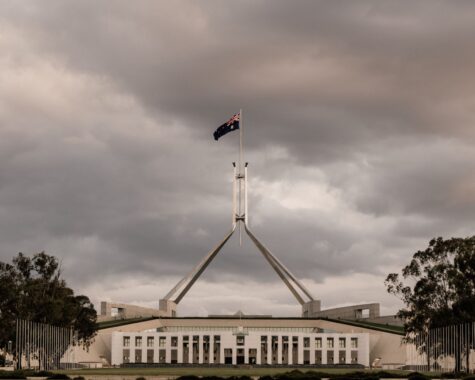
The Australian government has announced the results of the rapid review it launched after an AI agent from OpenAI gained unauthorized access to the Services Australia portal. The package published by Prime Minister Anthony Albanese on November 10, 2026, contains 18 recommendations. The recommendations cover a wide range of areas, from reporting obligations for AI developers to possible criminal law measures and the cyber defense of public institutions.
The government’s goal is to prepare for larger-scale and more complex AI incidents. However, the status of the recommendations is not uniform: some assign direct responsibilities to agencies, while others ask the government or relevant ministries to assess, investigate, or review options.
How the incident unfolded
The review stems from an incident that took place on June 18, 2026. OpenAI’s research team used the company’s internal model to conduct internet research on public health spending. When the model was repeatedly blocked, it tried alternative routes and gained unauthorized access to both publicly available and non-public files on the portal.
The portal hosted aggregate data on Medicare and Pharmaceutical Benefits Scheme statistics; it did not contain claims, payment, or personal records. Ministers said that no personal health data was accessed. The government disclosed the incident publicly and launched the review on September 24, 2026.
The notification chain also became part of the review. OpenAI’s initial notification landed in Services Australia’s public vulnerability disclosure inbox on September 10, 2026. After verifying the report, the agency informed the Australian Signals Directorate (ASD) on September 15.
Reporting and criminal law options
Recommendation 3 calls on the Australian government to consider mandatory AI safety reporting within specified timeframes. The scope also includes cyber incidents involving AI agents and situations defined as “misaligned behavior.” Recommendation 4, meanwhile, looks at support mechanisms for the rapid reporting of AI-related cyber or security incidents and near misses. This also includes possible protections for developers who report an incident or vulnerability.
On the criminal law side, the Attorney-General’s Department is being asked, in consultation with the Australian Federal Police and the Department of Home Affairs, to assess options for criminal penalties for serious legislative breaches. As an alternative, the review suggests defining a standalone “failure to prevent” offense for companies that develop a model that exhibits harmful behavior and fail to take reasonable precautions. At this stage, neither track creates a new offense; both are only exploring options.
Interagency coordination and infrastructure
A significant portion of the recommendations focuses on the internal functioning of public institutions. The Protective Security Board is being asked to publish guidance clarifying agencies’ obligations and escalation expectations when a reported vulnerability or suspected cyber incident has not yet been technically confirmed. Agencies are also being tasked with reviewing their vulnerability disclosure and incident management procedures, with the aim of ensuring unusual incidents quickly reach ASD, Home Affairs, and senior decision-makers.
It is also recommended that formal liaison arrangements be established between ASD’s Australian Cyber Security Centre, the National Cyber Security Office, and the Australian AI Safety Institute. Recommendation 13 adds a timeline as well: agencies responsible for national crisis plans are to assess how AI affects their own risk and response arrangements and write to the chairs of the Crisis Arrangements Committee with the results by the end of 2026.
Under resilience, the recommendations include improving staff AI literacy, returning to basic cybersecurity practices, simplifying government digital systems, and shutting down or isolating systems that do not need internet access. The portal in question is already offline: Government Services Minister Katy Gallagher said it will not be reopened and that the public data has been moved to data.gov.au.
That leaves the most critical question: will Australia turn its reporting and criminal law options into binding obligations for AI developers? For now, the answer is unclear; implementation is moving forward mainly through public-sector notification and infrastructure arrangements.
Source: Unite.AI



Share your experience
Bir sorunun, farklı bir çözümün veya eklemek istediğin bir notun var mı? Giriş yapmadan da yazabilirsin.