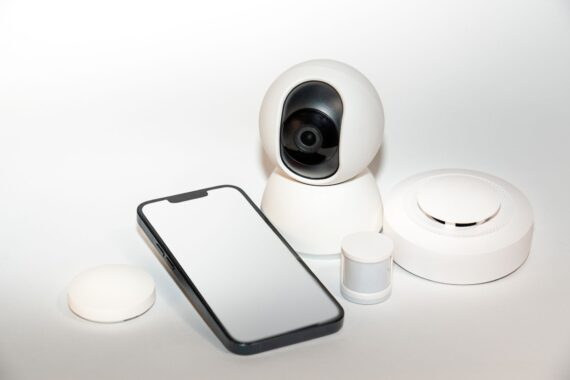
Tuya Smart has released an open-source skill that connects smart home devices to Meta’s AI agent, Muse. Called Tuya Cloud Devices, the skill lets Muse query and control the lights, plugs, air conditioners, cameras, and sensors in a user’s Tuya account through cloud APIs. The most practical part is that setup doesn’t require a per-device local key, a shared local network, or firmware changes.
This approach breaks away from the add-on hardware path in Meta’s Muse Gadgets project. That project includes open-source SDKs for ESP32 boards or Linux systems like Raspberry Pi, and it requires setting up a separate device for Muse. Tuya’s solution, by contrast, targets devices that are already connected to the user’s cloud account instead of adding new hardware.
Cloud connectivity eliminates per-device setup
Authentication is handled with a single free API key. The two characters after the key’s “sk-” prefix identify the account’s data center and automatically select one of seven regional endpoints. That means the user doesn’t have to configure the endpoint manually. With the local key method, by contrast, the key could become invalid when the device was re-paired, forcing the setup to be done again from scratch.
Before generating commands, the skill reads the device’s Thing Model definition. This definition includes which features are supported, which ones are readable or writable, value ranges, and increment steps. Tuya’s API documentation also recommends reading this model before sending a command. That allows the same skill to work across different devices without writing separate adaptations for each product category. If there is already a product-specific or local control skill for a device, the request is routed to that first.
What it can do, and what’s out of scope
Supported actions include listing homes, rooms, and devices; renaming a device; adjusting power, brightness, temperature, and mode settings; reading weather and energy statistics; and retrieving camera snapshots and videos up to 60 seconds long. Real-time subscriptions work through WebSocket events, but this requires a Linux device that stays on continuously. Tuya mentions a program running on a Raspberry Pi with the Muse Gadgets Linux SDK that receives events and executes user-approved trigger-action automations. Event notifications can only be sent to the user as SMS, voice calls, email, or app notifications, and there must be at least 30 minutes between two notifications.
There are safeguards on the physical device side as well. When more than one device matches a request, the skill lists the rooms and asks for confirmation. It doesn’t send commands to offline devices, doesn’t write to read-only properties, and rereads the status one or two seconds after a command to verify success. Door lock control, live video, firmware updates, network configuration, device pairing or removal, and complex data types are excluded from scope; for these actions, the user is directed to the Tuya app. The API key is used only in request headers, is not exposed in the chat, and can access only the devices in the user’s account.
In trial for now, and currently only in the US and Canada
Tuya’s repository is MIT-licensed, but all current API endpoints are marked as being in trial. That means rate limits, call quotas, and similar usage restrictions may apply. The Muse adaptation was submitted to Meta’s project as pull request number 61 and is still under review. Until it is merged, there is no authorized copy in the Muse Gadgets repository; the main version is the tuya-smart-control skill in Tuya’s own repository.
Muse is currently available only in the US and Canada. So for users in Turkey, this route isn’t open yet. Even so, Tuya says other agents that support the SKILL.md format could also use the infrastructure. According to the company, this portability could let brands open their devices to different agent ecosystems without developing a separate integration for each agent.
Tuya’s move is a step toward taking AI agents beyond hardware built specifically for them and connecting them to devices that are already installed in homes. For now, though, real-world use depends on the limits of the trial APIs and the outcome of Meta’s review.
Source: Unite.AI



Share your experience
Bir sorunun, farklı bir çözümün veya eklemek istediğin bir notun var mı? Giriş yapmadan da yazabilirsin.