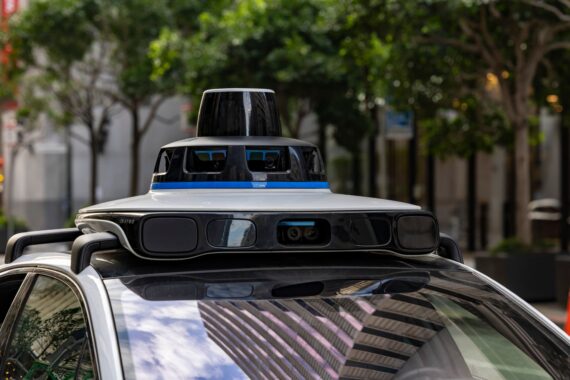
The Autoware Foundation released version 2.0 of its open-source autonomous driving software on November 2, 2026. On the same day, TIER IV announced that it is leading the Autoware 2.0 initiatives. The new release adds end-to-end AI and hybrid driving stacks alongside rule-based modules.
TIER IV describes the release as a major evolution in open-source autonomous driving software. According to the company, 2.0 expands data-driven and AI-based approaches while maintaining compatibility with traditional rule-based methods.
Rules and AI in a single architecture
Until now, Autoware had been structured as a modular pipeline made up of perception, localization, planning, and control steps. The packages were split into two layers: Autoware Core, the stable library, interface, and API set maintained by the foundation, and Autoware Universe, the layer containing additional features and experimental algorithms. Rather than replacing this structure, 2.0 builds on it and brings rule-based technologies and AI-based ones together in a common architecture.
At the center of the release is a new producer–selector architecture. Multiple trajectory producers can run within the same system, and a selector decides which output to use. This lets developers combine rule-based modules, AI modules, or a mix of both in a single architecture depending on the use case. Along with the release, documentation for the new architecture and a simulator demo that runs rule-based modules together with various end-to-end modules were also published.
Model and data access changed
The way AI models and datasets are brought into the working environment has also been refreshed. In the previous setup, every model download was defined in a central Ansible file. Now, the Autoware Foundation’s Hugging Face organization, together with version control, is the default address for base models and datasets. Definition files can also point to the foundation’s machine learning server, AWS S3, or third-party servers, so existing files continue to work during the transition.
The new Autoware Index acts as a directory where Autoware-compatible repositories and Reference Designs can be found from a single place. The command-line tool Autoware Index CLI writes selected packages or an entire Reference Design, along with its dependencies, into the working environment. With this release, five packages in the Universe layer were moved to their own repositories, and labels were reorganized under headings such as “ai”, “reference-design”, and “e2e”.
Reference Design framework
The new Reference Design framework consists of two parts. The Deployment Profile describes the vehicle and hardware configuration, operating conditions, and use case. The Reference Software Stack, in turn, provides a published baseline that clarifies modules, model versions, parameters, interfaces, and platform requirements. Candidate stacks include rule-based planning, an end-to-end stack, and a hybrid stack. The designs are divided into application families such as low-speed service vehicles, highway assistance systems, and urban robotaxis.
Each design carries a status field that separates the targeted capability from the demonstrated result; operating domains are defined using ASAM OpenODD terminology.
TIER IV Founder and CEO Shinpei Kato described the release as “an important step toward the democratization of autonomous driving in the era of AI-defined vehicles.” Kato said that open-source software alone will not be enough to transform the automotive industry and noted the need for an ecosystem that brings together AI, compute platforms, cloud infrastructure, and automotive software in practical solutions.
Partnerships with Arm, AWS, and Red Hat
The initiatives expand TIER IV’s ongoing collaborations with Arm, AWS, and Red Hat. With Arm, compute platforms for Autoware 2.0 are being developed; the work is progressing as a representative use case under Arm Total Design for Physical AI. With AWS, cloud-native development and operating environments are being addressed. With Red Hat, work is underway on system integration between Autoware 2.0 and AutoSD, the open-source upstream project of the Red Hat In-Vehicle Operating System.
Autoware 2.0 is available for download on GitHub. Documentation is at docs.autoware.org, package and Reference Design discovery is available through Autoware Index, and base models are hosted on Hugging Face. Representatives from the four companies will also present at the Automotive Software Strategies US 2026 event held in San Jose on November 3-4, 2026.
Source: Unite.AI


Share your experience
Bir sorunun, farklı bir çözümün veya eklemek istediğin bir notun var mı? Giriş yapmadan da yazabilirsin.