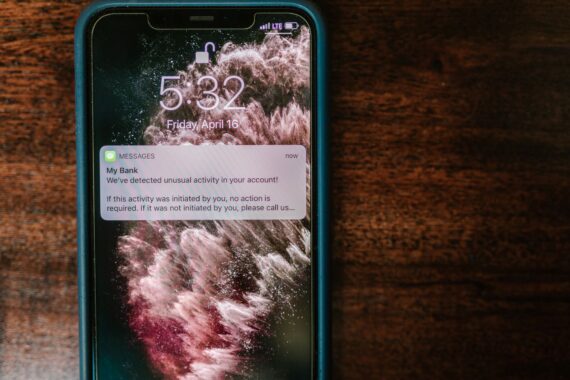
Google DeepMind and Singapore’s Government Technology Agency (GovTech) announced an on-device fraud detection model that warns users against manipulative conversations on October 14, 2026. What sets the model apart is that it does not send messages to the cloud for analysis: detection happens entirely on the phone.
For Singapore, the issue is not theoretical. Since 2019, fraud-related losses in the country have exceeded 4 billion Singapore dollars, and attacks are increasingly shifting from technical vulnerabilities to social engineering.
Trained on local scam language
General-purpose models struggle with local deception tactics. That is why DeepMind’s lightweight Gemma model was fine-tuned on region-specific scam conversations. The training data covers a wide range, from scenarios impersonating public institutions, banks, and well-known local names to popular regional traps of the time.
GovTech’s director of trust and safety, Mark Chen, says that fighting fraud should not mean sacrificing personal privacy. According to his statement, the model aims to catch targeted local scam attempts in real time while keeping personal messages completely private.
Messaging apps can integrate it directly
The announcement was made at Singapore International Cyber Week 2026. Singapore’s Minister for Home Affairs K. Shanmugam delivered the event’s opening speech on October 13, 2026. The path to widespread adoption has also been left open: messaging platforms and operating system makers can embed these lightweight models directly into products to protect users locally. This way, chat data never leaves the device.
This approach is presented as a model for platforms trying to catch fraud while preserving end-to-end encryption. In other words, the goal is not to break encryption, but to flag suspicious patterns on the device.
The collaboration is part of a broader program
The announcement is the latest link in Google’s national AI partnership with Singapore. The program includes projects such as trials of an AI-assisted physician assistant with public health clusters, Google.org’s support for pandemic preparedness research, and a Gemma-based training assistant for visually impaired athletes. The fraud detection model appears to be the part of this collaboration that will reach the widest audience.
Source: Unite.AI


Share your experience
Got a question, a different solution or a note to add?
Log in or join us to write a comment.
Log in ↗︎Sign up ↗︎